Pmoc Abrava is widely referenced in industrial and materials workflows where controlled reactivity and consistent handling matter. This guide explains what “Pmoc Abrava” typically denotes in technical contexts, why sourcing and verification are important, and how to approach procurement, storage, and documentation from an expert perspective, using objective criteria for safety and compliance.
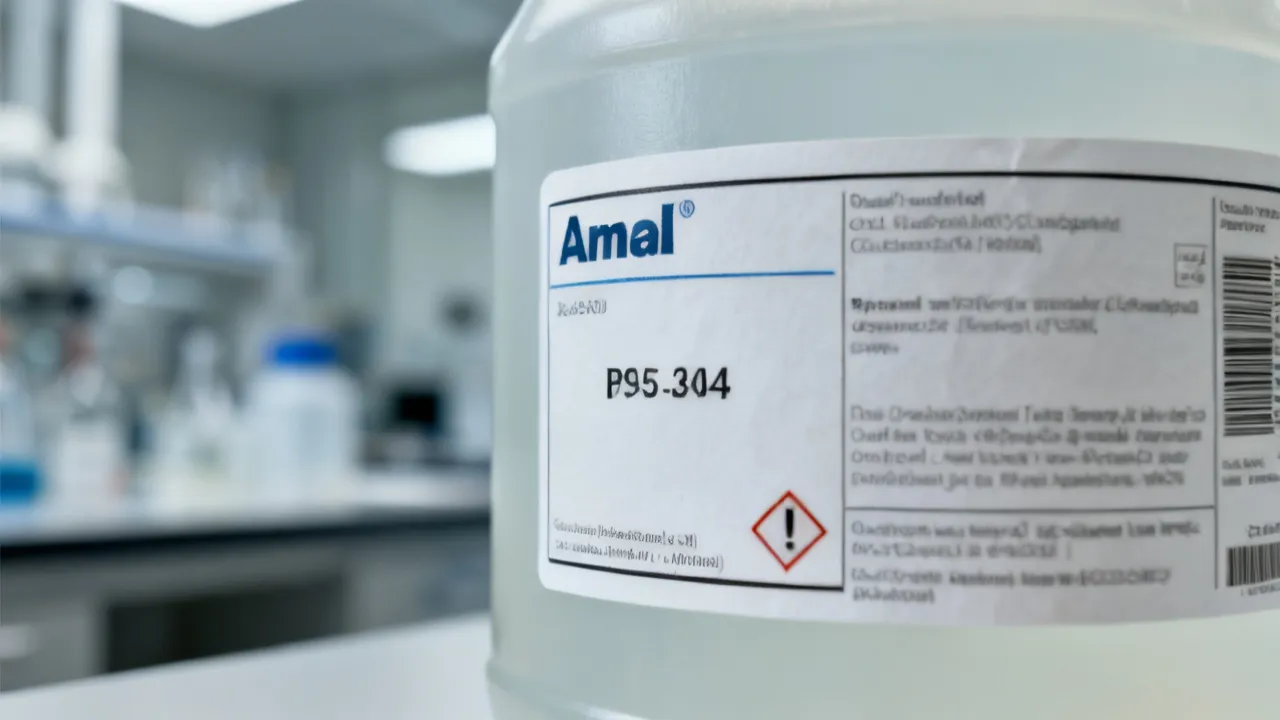
When professionals encounter Pmoc Abrava, the very important step is not simply obtaining it, but ensuring that the material matches the intended chemical grade, regulatory classification, and handling requirements for your process. A sound approach blends technical verification (identity, purity, spec sheet alignment) with operational controls (storage compatibility, exposure prevention, waste handling) and documentation discipline (COA/SDS traceability, batch records, and change control).
In practice, “Pmoc Abrava” may appear as a shorthand term used across workflows—often tied to a specific intermediate, protected group reagent, or process input depending on the industry and supplier. Because names can vary by vendor, region, or internal naming conventions, the safest and very reliable way to proceed is to treat “Pmoc Abrava” as a procurement and verification label, not an assumption of identical composition across sources.
This stance is not only a quality principle; it is also a risk-management strategy. Chemical systems—especially when they involve specialty reagents, intermediates, or controlled substances—are sensitive to differences in impurity profiles, moisture content, particle size, stability under atmospheric exposure, and the presence of residual solvents or byproducts. Even when a vendor lists a material under the same label, batch-to-batch variation and formulation differences can exist. Responsible practice means you assume variability exists until your received documentation and incoming verification prove otherwise.
Accordingly, your approach should be designed around three recurring questions: (1) What exactly did we receive? (identity and physical form), (2) Does it meet our acceptance criteria? (specification fit and risk-relevant parameters), and (3) Can we use it safely and consistently? (handling, storage, compatibility, disposal, and traceability). Everything else—price, vendor reputation, or convenience—should be subordinate to these questions.
Although “Pmoc Abrava” is not a universal, single globally standardized chemical name in general consumer contexts, it is frequently used in industry to reference a particular reagent or material used for defined reactions or material preparations. In many technical environments, the term functions like a work order identifier: the label matters, but the actual chemical identity is confirmed through supplier documentation and analytical data.
From an expert standpoint, the top way to interpret such terms is to connect them to three anchors:
This approach is especially relevant when teams are comparing offers from different suppliers, dealing with re-batched products, or standardizing a multi-site supply chain.
It’s also relevant because nomenclature may be “local.” A name like “Pmoc Abrava” might reflect an internal code, a trade designation, or a shorthand that groups multiple similar forms (for example, hydrate vs. anhydrous, different particle size grades, different solvent systems, or different purity classes). Therefore, even if your procurement system repeats the same label across purchases, you still need to validate the actual substance and grade. The best professional practice is to treat “Pmoc Abrava” like a request identifier rather than a chemical truth claim.
Procurement teams often compare price first, but with materials labeled as “Pmoc Abrava,” total cost of ownership is usually the real decision factor. Two suppliers might quote different costs per unit, yet differ in batch traceability, analytical rigor, packaging suitability, and lead times. If a deviation in grade leads to yield loss, extended troubleshooting, or rework, the “cheaper” option can become substantially more expensive.
An objective procurement method usually accounts for:
Supplier details should therefore be evaluated as part of performance, not merely as an external vendor attribute. In chemical supply chains, documentation quality is itself a form of supply reliability.
To make “price” comparisons responsible, it helps to compute an “effective landed cost” rather than using the catalog or quote price alone. Effective landed cost can include: the cost of additional incoming testing, the cost of requalification or method verification for a new supplier, the cost of downtime if a material arrives late or under incorrect storage conditions, and the cost of waste if the material must be quarantined due to documentation or quality discrepancies.
For organizations operating under quality systems (GMP, ISO 9001, or validated manufacturing processes), the internal cost of nonconformances also matters. A supplier that consistently delivers data that passes receiving review typically reduces cycle time and reduces deviation rates. Therefore, “price” should be compared alongside process risk and administrative burden (documentation processing time, approval delays, and audit readiness).
For materials referenced as Pmoc Abrava, safety decisions should be driven by the SDS and your internal EHS (Environment, Health & Safety) framework. While I cannot confirm the exact hazard profile without the specific SDS, there are consistent professional top practices that apply broadly to specialty reagents and controlled chemicals.
In practice, responsible handling is not only about wearing gloves or using a fume hood. It is about building a consistent control stack that reduces the probability and severity of exposure. That control stack often includes:
Even when two chemicals have similar labels or molecular descriptions, their hazard profiles can be very different. Therefore, the SDS tied to your specific batch should always govern handling decisions. Do not rely on prior experiences with similarly named materials unless the identity and SDS match your incoming material.
Identity verification should be treated as a gate. A common risk pattern in labs and manufacturing is “workaround behavior,” where teams start testing or processing before documentation is fully verified—sometimes because work deadlines are tight. Responsible practice is to quarantine the material until the documentation is confirmed and, where needed, until receiving tests are passed.
Identity verification can include internal checks depending on your quality system maturity. For example:
The goal is not to duplicate everything the supplier does; the goal is to confirm the received material is the material you intend to process, at the grade you intend to use.
Preventing unintended exposure includes planning your workflow. For example, you should design the transfer steps so that open exposure time is minimized. If the SDS indicates irritation or toxicity, then using closed containers and transfer under local exhaust ventilation becomes more important. If the SDS indicates the substance is reactive, moisture-sensitive, or decomposes under certain conditions, then your exposure controls may need to include inert atmosphere handling and dry transfer techniques.
Another common safety gap is insufficient labeling and poor segregation during handling. Many incidents occur when a container is moved to a bench, partially emptied, capped inconsistently, or temporarily stored in an unlabeled area. A responsible workflow includes:
Storage compatibility is a frequent failure point in both laboratory and manufacturing environments. It’s not enough to store chemicals in “a cabinet.” You need to consider incompatibilities (acids vs bases, oxidizers vs organics, reactive metals vs water, and so forth), container material compatibility (some chemicals permeate certain plastics), and environmental conditions (temperature, humidity, light exposure).
Additionally, shelf-life management should be integrated into your inventory system. Some specialty reagents can degrade over time or react with trace moisture. If the SDS or supplier indicates a recommended storage time, you should enforce it with periodic reviews or requalification. If your process is highly sensitive, you may need a re-test plan near expiry or after storage excursions.
Compatibility also extends to how containers are staged. For instance, if you stage multiple reagents at the point of use, you should ensure you are not creating an incompatible adjacency pattern. The “distance” from incompatible materials in a lab can matter if spills or container leaks occur.
Waste planning should occur before you start using the material. Teams sometimes underestimate waste volumes because they scale-up beyond expectations or because the reagent’s handling leads to more contaminated solvents, wipes, or PPE. A responsible process includes:
Decontamination and spill response are connected: if an incident occurs, your ability to safely manage the aftermath depends on having the correct absorbents, neutralizers (if applicable), and disposal pathways prepared in advance.
For background on hazard communication practices, organizations commonly rely on globally harmonized chemical labeling frameworks and local regulations. Two widely used references include the Globally Harmonized System of Classification and Labelling of Chemicals (GHS) and local regulatory systems for hazardous materials in workplaces. For example, the U.S. Occupational Safety and Health Administration explains SDS requirements under the Hazard Communication Standard, and the European Chemicals Agency provides guidance tied to REACH and SDS generation.
Sources (for general safety documentation frameworks):
When teams search for Pmoc Abrava from different vendors, supplier details should be treated as part of due diligence. An expert procurement file usually includes:
Even when two quotes look similar, the supplier that can provide stable, audit-ready documentation reduces operational risk for the receiving lab or manufacturing floor.
To operationalize supplier evaluation, many organizations create a supplier scorecard that measures more than delivery punctuality. A responsible scorecard can include:
If “Pmoc Abrava” is critical to yield, safety, or regulatory outcomes, then supplier evaluation should be tied to the risk level of the role the reagent plays in your process. The criticality might be higher for intermediates, where impurities or degraded material can propagate into downstream products.
Specialty reagents often face a common operational challenge: nomenclature mismatch. A label like “Pmoc Abrava” can be used as shorthand, internal naming, or trade-style naming. In regulated environments or high-stakes manufacturing, organizations typically mitigate this by requiring:
This practice is consistent with quality systems used across industries: you reduce variability by anchoring decisions to verified data rather than label assumptions.
To improve naming consistency, organizations often implement a “dictionary” between internal part numbers and external supplier identifiers. Such a dictionary can include: the chemical identity (CAS/EC number), grade name, intended physical form, key spec limits, and the SDS revision date. This becomes especially important when multiple sites purchase the same reagent but maintain slightly different internal codes. If those sites treat “Pmoc Abrava” differently, you can get unexpected differences in performance.
Another practical approach is to use a single source of truth in your system: for example, the internal procurement item master record can store the SDS and COA template references, the expected grade, and acceptance criteria. When a supplier quote references “Pmoc Abrava,” the procurement team can validate that the quote maps to the same internal master record before purchase approval.
In addition, you may need to ensure that your internal labeling aligns with your quality system. The label “Pmoc Abrava” should not be your only reference; your internal batch records and lab notebooks should include the exact grade and batch/lot number, plus links to the SDS/COA documents received for that batch.
Even without quoting a specific “price for Pmoc Abrava” (because prices vary widely by region, grade, packaging, and market conditions), procurement should calculate an internal “effective cost.” A typical framework is:
That kind of accounting helps decision-makers avoid false savings.
It can also help to quantify intangible costs such as “cycle time.” For example, if a supplier consistently provides incomplete COAs, receiving approval may require extra clarification, which delays batch release and can cause schedule drift. If your process uses validated timelines, schedule drift can become cost-intensive. Therefore, effective cost includes not just money but time, reliability, and operational friction.
In some cases, the cheapest supplier can also be the supplier with the longest lead times, which may force you to hold extra safety stock. Holding safety stock incurs warehousing costs and expiration risks. If “Pmoc Abrava” degrades over time, safety stock may also become quality risk. Therefore, a disciplined procurement policy should align with the material’s stability and shelf-life constraints.
Cost planning should also factor in the cost of scaling your incoming inspection. If your internal acceptance criteria require additional testing for a new supplier, those tests consume staff time and laboratory resources. Effective cost should include that overhead.
Below is a structured comparison and implementation guide that teams can adapt. It focuses on objective requirements rather than vendor marketing claims.
| Stage | What to compare | Recommended condition/requirement |
|---|---|---|
| Definition & identity | Whether “Pmoc Abrava” label maps to the same SDS entry and COA identity across suppliers | Require SDS + COA that match the exact product name/grade and batch/lot number before receiving into process |
| Specification fit | Purity/impurity limits, moisture or water content, physical form, and test methods | Run a pre-use spec review against your internal acceptance criteria; reject mismatches |
| Safety & training | Hazard statements, PPE guidance, storage incompatibilities, spill response notes | Ensure operators are trained per your local hazardous materials procedures and SDS requirements |
| Storage readiness | Container compatibility, temperature/light/moisture sensitivity indications | Store only in designated, labeled storage compatible with SDS; document storage conditions if required |
| Documentation control | COA test data availability and clarity (methods, detection limits where applicable) | Archive COA/SDS by batch and link them to receiving and production records |
| Incoming acceptance | Whether the supplier consistently provides data supporting release | Apply a formal incoming inspection/verification process aligned with your quality system |
| Change management | Any supplier changes in grade, synthesis route, impurity profile, or packaging | Require documented notification and perform a risk review before adopting changes |
| Waste & compliance | Waste classification guidance, decontamination notes, and disposal approach | Define waste streams and disposal procedures prior to first use; follow local regulations |
To make this table actionable, the “recommended condition/requirement” should be turned into a checklist with sign-offs. For example: receiving warehouse staff sign for label and batch matching; quality assurance signs for COA/SDS completeness; EHS signs for storage/handling alignment; and the process owner signs for spec fit and process compatibility.
Sign-offs should also define the consequences of failure. For example:
To expand this checklist into a more robust workflow, you can define what “done” means for each line item. For example:
When teams follow a “definition of done,” they reduce ambiguity and make it easier to audit compliance later.
The request did not specify a city or country, so this guide does not embed location-specific compliance claims. In general, however, you should align your procedures with local regulatory expectations for hazardous chemicals and workplace safety—often influenced by national adoption of GHS concepts and SDS standards.
If your organization operates across regions, the safest operational practice is to maintain a “global-to-local mapping” document: global supplier documents provide the baseline hazard communication, while local EHS policy translates that into facility-specific rules (storage cabinets, waste pickup procedures, signage requirements, and training frequency).
Local considerations often include:
Because these rules vary by jurisdiction, the best practice is to avoid assumptions. Instead, integrate local regulatory requirements into your SOPs and training plans. Your SOP should cite the local basis (e.g., “per local hazardous waste regulations and site policy”), while still using supplier SDS content as the hazard-specific source.
Not necessarily. “Pmoc Abrava” can function as a shorthand or trade-style label. To ensure consistency, you should confirm the identity using the SDS and COA for the specific batch/lot and check that the grade and form match your process requirements.
Additionally, even if two suppliers provide the same chemical identity, they may provide different grades. For instance, “technical grade” versus “reagent grade” can differ in impurity thresholds or allowed residual solvents. If your application is sensitive to impurities, then you must validate impurity-related parameters, not just the headline purity number.
At minimum, request the SDS and COA, plus the product specification sheet. If your application is sensitive to impurities or physical properties, ask for additional analytical details or test method summaries included in the COA format.
Beyond the minimum, consider requesting:
When these documents are available, your incoming acceptance becomes more targeted and less wasteful, because you can focus on risk-relevant parameters rather than testing everything.
Compare total value, not just unit cost. Include packaging type, documentation completeness, traceability, lead time reliability, and whether the specification matches your acceptance criteria. If data quality differs, the “cheaper” option can create higher rework or yield risk.
Fair comparisons also require “apples-to-apples” normalization. If one vendor quotes a smaller container size, then the unit price might look lower or higher depending on packaging markup. If one vendor includes COAs that cover more impurities or includes stability data, then you may be buying more verification capacity. Responsible procurement accounts for these differences explicitly.
Common pitfalls include using the material based on label assumptions rather than SDS identity, improper segregation/storage of incompatible chemicals, transferring without the right containment, and insufficient batch traceability (weak documentation links between received material and production use).
Other frequent mistakes include:
Often yes. Even when suppliers provide COA and spec sheets, organizations typically perform an incoming acceptance verification aligned with their quality system—especially for first-time suppliers, new batches, or when your process is sensitive to impurity profiles and moisture content.
Whether you need additional testing depends on risk. A structured way to decide is to consider:
In some cases, you might only do identity and impurity screening tests; in others, you might need full performance testing (such as a small-scale reaction run) to ensure compatibility. Your internal quality plan should specify which testing is required and when.
Follow the SDS storage and incompatibility guidance. Store only in designated, labeled storage areas compatible with the material’s hazard classification and any stated sensitivities (temperature, light, moisture). Also maintain inventory controls and shelf-life monitoring.
Storage decisions should also incorporate practical workflow factors: the storage location should be near the point of use if that reduces open transfer time, but not near incompatible chemicals. If the SDS indicates a need for inert gas or desiccation, then you must ensure the storage system supports that requirement (for example, dry cabinets, desiccators, sealed containers with compatible seals).
Workplaces generally rely on SDS requirements grounded in the GHS framework and local hazardous communication rules. In many regions, authorities like OSHA (U.S.) or ECHA-linked guidance (EU) shape how SDS information is expected to be generated and used.
Because standards and enforcement details differ, the safest approach is to rely on your corporate EHS policies and the local legal requirements for SDS availability, labeling, and training documentation. Your SOPs should treat SDS as a primary hazard communication source but also integrate site-specific rules.
I can’t provide verified hazard specifics without the exact SDS for the specific product and concentration/mixture status. For accurate hazard handling, always use the SDS from the supplier tied to your batch/lot.
If you want to translate hazards into action, you can extract the hazard classes and key SDS sections relevant to your operation (for example: Section 2 hazard identification, Section 7 handling and storage, Section 8 exposure controls/PPE, Section 4 first-aid measures, and Section 6 accidental release measures). Those sections become the input for your SOP and risk assessment.
For teams working with Pmoc Abrava, the very professional and objective strategy is to treat it as a verified process input—confirmed through SDS/COA alignment, evaluated through specification fit and supplier traceability, and handled via documented safety controls. By focusing on identity verification, specification compatibility, and compliance-ready documentation, you reduce operational risk and improve repeatability in whatever technical workflow uses the term “Pmoc Abrava.”
In practice, “responsibly” means your organization has a repeatable system: you verify the material before use, you operate it within a controlled safety envelope, and you maintain traceability so that if something goes wrong, you can investigate with confidence. That is how you turn a supplier label into a reliable and controlled process input.
Final note: If you share the industry context (for example, polymer chemistry, intermediate synthesis, or materials processing) and the nature of the material (solid/solution) from the supplier’s SDS/COA, I can help you translate those specifics into a tighter, application-focused set of acceptance criteria and handling considerations—while keeping the guidance grounded in the actual documentation.
Striking the Perfect Balance: Navigating Premiums and Out-of-Pocket Expenses in Senior Insurance Plans

Explore the Tranquil Bliss of Idyllic Rural Retreats

How to Make Lasting Memories at Disneyland Attractions

4rkojvsx Technology: Industry Insights and Buying Guide

Affordable Phones and Plans for Seniors

Affordable Full Mouth Dental Implants Near You

Unlock the Top Kept Secrets to Finding Your Ideal Dentist for Flawless Dental Implant Results!

Discovering Springdale Estates

Unveiling RS Sul Telecom Services

Pmoc Abrava: Practical Guide for Safe Handling
Pmoc Abrava is widely referenced in industrial and materials workflows where controlled reactivity and consistent handling matter. This guide explains what “Pmoc Abrava” typically denotes in technical contexts, why sourcing and verification are important, and how to approach procurement, storage, and documentation from an expert perspective, using objective criteria for safety and compliance.